Where to Stay in the Algarve, Away from the Resorts
The Algarve most people book is thirty kilometres of resort coast. The Algarve worth staying in is everywhere else — and it is mostly farmhouses, converted outbuildings, and places with fewer than a dozen rooms.
Algarve, Portugal · Published August 2026 · 12 min read
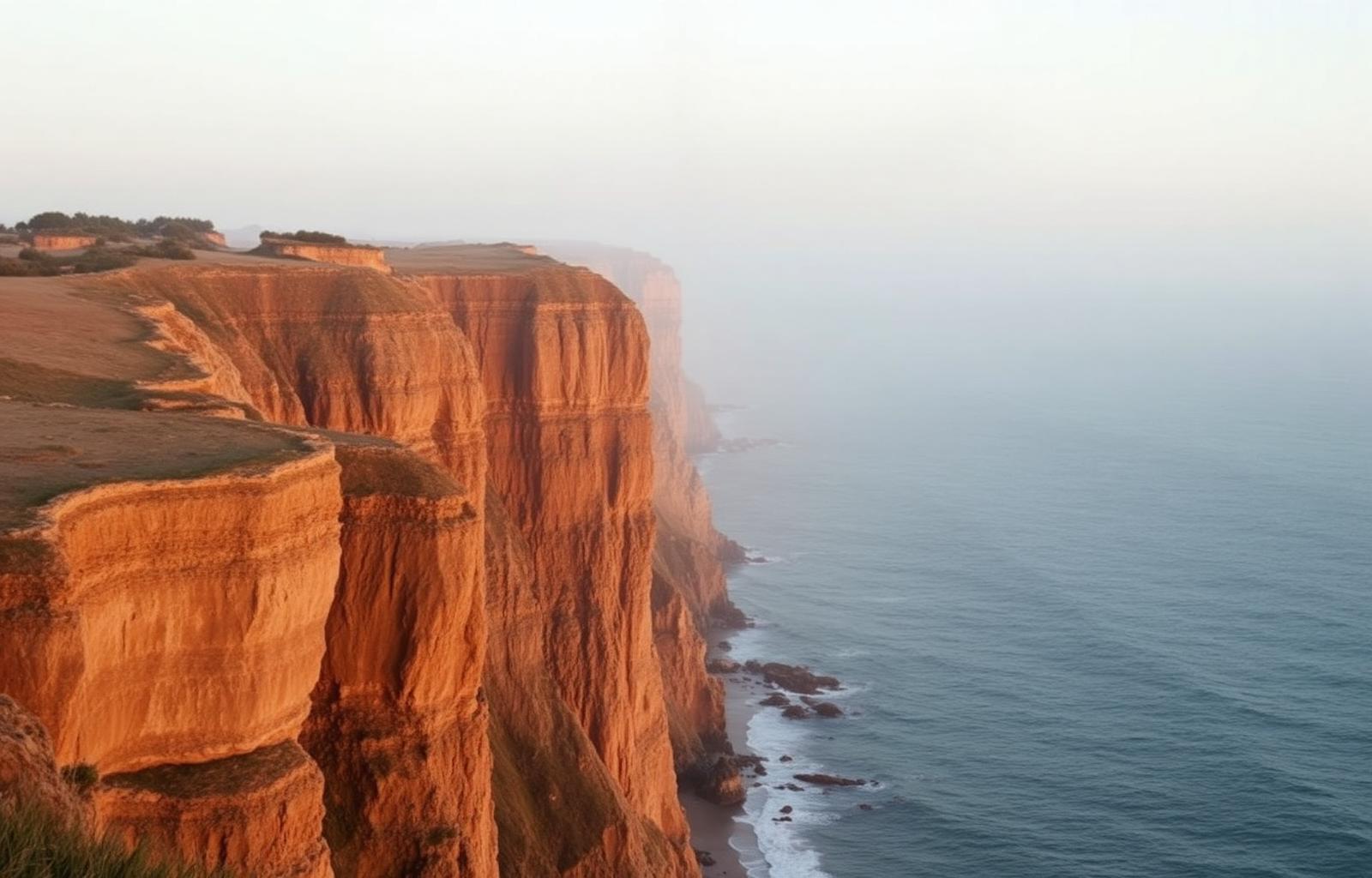
There is a version of the Algarve that arrives fully formed in the imagination: a strip of high-rise hotels between Albufeira and Vilamoura, a beach club, a golf course, a road that smells of sunscreen and hot asphalt. That Algarve exists. It occupies perhaps thirty kilometres of a coastline over one hundred and fifty kilometres long.
Everything else is quieter, and much of it is older. Inland from the resorts, a limestone country called the Barrocal rises in terraces of carob and fig toward the Serra do Caldeirão. East of Faro, the Ria Formosa lagoon spreads for sixty kilometres behind a chain of low sand islands, and the towns on its edge — Olhão, Fuseta, Tavira — are still working towns. West of Lagos the coast turns north and the weather turns Atlantic, and the villages get smaller until they stop altogether at Odeceixe. Above Portimão, the Serra de Monchique climbs to nine hundred metres of cork oak and chestnut, and the air changes.
This is a guide to where to sleep in those places, and a companion to our guide to quiet places in the Algarve. Almost everything here is small — several have fewer than ten rooms, some have three — and almost all of it was something else first: a granary, a carob farm, a seventeenth-century fort, an abandoned village. That is not a coincidence. Away from the resort strip there was never the demand to build hotels, so the accommodation that exists is what people made out of the buildings already standing.
A word on what this list is not. It is not ranked, it does not quote prices, and nothing here was chosen because it pays a commission. Where a property has a quirk worth knowing — a season that ends in November, a house let only in its entirety — it is stated, because that is the kind of detail that changes a booking.
What "away from the resorts" actually means
The resort Algarve is easy to draw on a map: Albufeira, Vilamoura, Quarteira, Praia da Rocha, and the built-up stretch of Alvor. It is busiest in July and August, when the region's seasonality is the most concentrated in Portugal — over half of all overnight stays fall into a handful of weeks.
Step ten kilometres inland, or forty kilometres east or west, and the density collapses. The properties below sit in five distinct areas, and choosing between them is really a choice about what you want the mornings to look like: lagoon and salt marsh, limestone and carob, Atlantic cliff, or chestnut forest. For the rest of the country, the same idea taken further is in our guide to secluded retreats in Portugal.
One practical warning that applies everywhere. Almost every property here sits at the end of a rural track. The eastern Algarve is genuinely reachable by train — the Linha do Algarve runs from Lagos to Vila Real de Santo António and stops at Olhão, Fuseta, Luz de Tavira and Tavira — but the last few kilometres will still be a taxi or a bicycle. Everywhere else, plan on a car.
The eastern Algarve and the Ria Formosa
This is the easiest of the five areas to reach and, for a first visit, probably the one to choose. Faro airport is twenty to fifty minutes away, the lagoon is a protected natural park, and the towns have not been rebuilt for visitors. If the islands themselves interest you, we have written separately about the remote islands of Portugal.
Casa Modesta, on the inner edge of the lagoon in the Olhão municipality, was the family house of Joaquim Modesto de Brito, a man his grandchildren describe as an old sea dog. They rebuilt it in 2015 with the architect Vânia Brito Fernandes, keeping parts of the old walls and adding white geometric volumes, terracotta floors and brass, made by local craftspeople from regional materials. Nine suites, each with a private patio, and an organic kitchen garden of fig and almond trees.
Quinta do Pinheiro, near Luz de Tavira, is a still-working nineteenth-century agricultural estate — parts of it date from 1870 and 1914 — that its Dutch owners deliberately did not maximise. They kept the avocado orchard, restored the vineyard, and converted only the buildings that already existed. Five houses, opened in 2024. Olhão, Fuseta, Santa Luzia, Tavira, Fábrica and Cacela Velha are all within cycling distance.
Pensão Agrícola, between Tavira and Cacela Velha, was built in 1920 as a wedding gift to the daughter of the Silva Gomes family. It stayed a working farm until 1970, was abandoned for four decades, and was restored by Atelier Rua into six suites — three inside the original farmhouse, three in contemporary modules in the grounds.
Forte de São João da Barra is a four-bastion coastal fort east of Cabanas de Tavira, begun in 1656 during the Portuguese Restoration War and extended in 1672 to defend the port of Tavira. It was renovated in 2007 and now holds ten rooms inside the defensive walls, with a boat out to the barrier-island beach.
Casas da Quinta de Cima, near Cacela Velha, occupies the former farm workers' houses of a fifty-hectare estate. The circular threshing floor — twenty-five metres across — has been kept as a feature. Casa Flor de Sal, at Moncarapacho inside the natural park, is a whitewashed farmhouse roughly two hundred and fifty years old, with guest houses spread across three further buildings and a natural lake.
Quinta dos Perfumes, at Conceição de Tavira, is a forty-hectare working farm that began by producing mallow essential oils — hence the name — was replanted with vines in the 1950s and then with citrus. Today it is about twenty thousand orange trees in rows, and the seventeen rooms look into the orchard.
Casa Fuzetta, despite the name, is in the old town of Olhão. It is a classical gentleman's townhouse restored between 2014 and 2016 by local craftsmen — exposed brick vaulted arches, stone floors, Moorish detailing — and it is let only on an exclusive whole-house basis. For a group, it is the most interesting building in this guide.
The Barrocal, the limestone interior
The Barrocal is the belt of limestone between the coastal plain and the schist mountains — carob, fig, almond, dry-stone walls, and villages that empty in winter. In April 2026 it became part of the Algarvensis UNESCO Global Geopark, covering Loulé, Silves and Albufeira across nearly two and a half thousand square kilometres. It is the only geopark south of the Tagus, and almost nobody has written about it in English yet.
Casa Brava, at Pedragosa near Loulé, is a stone farmhouse built around 1850 with three suites named for what the buildings used to be: the Old Pig Suite, the Old Donkey Suite, the Old Cellar Suite. There is an unchlorinated natural pool.
Casa da Tita, at Nave do Barão in the parish of Salir, is a working organic carob farm whose outbuildings became the rooms. The two apartments are the Celeiro, the granary, and the Palheiro, the hay barn. One of the three bedrooms is inside an old cistern; another keeps its original decorative plasterwork ceiling.
Herdade da Corte, at Santa Catarina da Fonte do Bispo, is a hundred-and-twenty-hectare cork oak estate where the Barrocal meets the Serra do Caldeirão. Twelve rooms split between two separate houses, Monte Lavrador and Monte Beleza. It describes itself as halfway between the mountains and the sea, fourteen kilometres from the coast, and it is isolated from any town — which is the point.
Two walks make this area worth more than a night. Rocha da Pena, above Salir, climbs onto a classified limestone escarpment with wide views across the Barrocal. Fonte Benémola, near Querença, is a loop through a spring-fed valley that stays green when everything around it has burned off. For the villages themselves, see our guide to hidden villages in Portugal.
The Costa Vicentina and the west
North and west of Lagos the Algarve stops being Mediterranean. The coast faces the Atlantic, the wind is constant, the beaches are enormous, and the whole strip sits inside the Parque Natural do Sudoeste Alentejano e Costa Vicentina. Faro to Sagres is a hundred and thirteen kilometres, about an hour and twenty-five via the A22.
Aldeia da Pedralva, near Vila do Bispo, is the most unusual entry here. By 2006 the hamlet's population had fallen from around a hundred to nine residents, and only nine of some fifty houses met minimum habitability standards. They were bought one by one and rebuilt to their original design, and the village now works as an accommodation village with a restaurant, a pizzeria and a shop.
Casa Fajara, at Vale de Carrapateira, is a rustic country hotel inside the natural park, seven hundred and fifty metres from the village and close to Praia do Amado and Praia da Bordeira. Twelve en-suite rooms, each with a terrace or balcony, and — unusually for this coast — underfloor heating and log fires, so it works in winter.
Monte da Vilarinha, on the hill above the same valley, is seven separate rural units rather than hotel rooms, each named for its building: Casa do Forno, the old oven house; Casa da Ribeira; Casa do Lago; Casa do Vale. They run from a thirty-square-metre double to a seventy-square-metre three-bedroom chalet.
Casa Presente, at Carrapateira, is not a conversion but a purpose-built ecological house — clay and wood, thick thermal-mass walls, high sloping wooden ceilings. Four rooms, and the owners run a morning bistro themselves in summer.
Muxima, in a green valley outside Aljezur, is six rooms across two buildings — Casa de Eira, named for the threshing floor, and Casa do Monte uphill. Amaria, at Odeceixe on the Alentejo border, is the furthest from Faro of anything here: a former quinta turned pared-back boutique hotel on the cliff inside the natural park, with a twenty-metre saltwater pool and a wood-burning sauna.
This is also where the walking is best. The Rota Vicentina runs through all of it — the Fishermen's Trail along the clifftops, and the inland Historical Way, from Odeceixe through Aljezur and Carrapateira to Sagres.
Monchique and the hills
Above Portimão the N266 climbs into the Serra de Monchique, and at nine hundred and two metres Fóia is the highest point in the Algarve. It is cork oak, chestnut and eucalyptus, and it is reliably several degrees cooler than the coast — which in August is not a small thing.
VilaFoia sits at five hundred and fifty metres on the flank of Fóia, with a twenty-five-kilometre view down the valley to the Atlantic. It was built with Monchique syenite, the rare nepheline syenite quarried in the serra, and has twelve en-suite rooms and a yoga deck under cork oaks.
Quinta do Tempo, outside Monchique town, is a century-old agricultural smallholding restored from 2014 and reopened in 2015 by its owners. The accommodation is in studios with mezzanines, wooden ceiling beams and exposed stone.
Central Monchique Hotel is different in kind: thirty-five rooms and suites inside the nineteenth-century buildings of Caldas de Monchique, the thermal spa hamlet in the wooded valley below the town. The hamlet itself is the attraction. Roman-era Latin inscriptions describe the water of Mons Cicus as sacred; the spring runs at a pH of 9.5.
Around Silves and the Arade
The quieter middle of the Algarve is the hardest of the five areas to recommend confidently — several long-standing small properties here have gone quiet online — but two are worth naming.
Tapada do Gramacho, at Estômbar between Silves, Lagoa and Ferragudo, grew out of the traditional farmhouse of the Semedo family. The rooms are individually named — Amália, Semedo, Bons Sonhos — and some have French balconies over the fields and the Arade river.
Quinta dos Vales, also at Estômbar, is a working forty-four-hectare wine estate with its own winery. It is not small, at forty units, but it is a real agricultural business rather than a resort, and the older villas are traditional Algarve countryside houses.
Choosing between them
If you have never been, take the eastern Algarve. It has the lagoon, the best small towns, the shortest transfer, and the only realistic public transport.
If you want to walk, take the Costa Vicentina in spring or autumn, or the Barrocal in winter, when the interior is green and the coast is empty.
If you are going in July or August, go inland or uphill. Monchique and the Barrocal are cooler and quieter than anywhere on the coast in high season.
If you are travelling as a group, look at Casa Fuzetta in Olhão or Casa Fajara in Carrapateira — both take a whole-house booking, and both are more interesting buildings than anything you could book by the room. For more in this vein, see unusual hotels in Portugal and the wider Hidden Places in Portugal atlas.
When to go, and how to get there
July and August are the peak, unambiguously and by a wide margin. November through February are genuinely quiet, and also the wettest months. The window worth aiming for is March to May, or late September through October: warm enough to swim at the edges, cool enough to walk, and most inland properties are open.
Several are not open otherwise. Quinta dos Perfumes closes from November to the end of February, Casa Brava runs March to November, and Tapada do Gramacho has historically shut for the winter. Casa Fajara, Monte da Vilarinha and VilaFoia all state year-round operation, which makes them the ones to look at for a winter trip.
Faro (FAO) is the only commercial airport serving the Algarve. From there it is roughly twenty to fifty minutes to the eastern Algarve, thirty minutes to Loulé and up to an hour to the serra villages, forty-five minutes to an hour to Silves and Estômbar, an hour fifteen to an hour thirty to Monchique on the winding N266, and an hour twenty to an hour forty-five to the Costa Vicentina, with Odeceixe furthest.
The A22, the Via do Infante, is electronically tolled with no toll booths — you need a transponder or a registered card. The toll-free N125 adds roughly forty-five minutes on the Faro to Sagres run. There is no direct bus or train from Faro to Sagres: you change at Lagos, and the whole journey takes about two and a half hours. There is no rail at all to Monchique, Aljezur, Carrapateira, Odeceixe, Sagres or any Barrocal village.
The Unknown Atlas is independent. We do not accept payment for coverage — how we handle commercial links.
A practical layer
Planning this journey
- Where to stay
- Small guesthouses, restored village houses, pousadas, rural hotels, or unusual stays that fit the route.
- Best with
- A small hire car, especially for inland villages, coast roads, Alentejo, Serra da Estrela, and schist villages.
- Experiences nearby
- Guided walks, wine tastings, boat trips, local food experiences, small-group tours, or quiet cultural visits depending on the article.
- Useful add-ons
- Travel insurance, eSIM/data, offline maps, flexible ferry/flight planning, and enough cash for smaller villages.
Quiet planning notes — never a booking widget. See our disclosure.
Continue exploring
More from Hidden Places in Portugal

Hidden Places
Hidden Places in Portugal Most Travellers Miss
Beyond Lisbon, Porto and the headline beaches, Portugal keeps a quieter country of stone villages, schist hamlets, river gorges and an Atlantic coast that thins out the moment the highway turns inland.
Hidden Places
Secluded Retreats in Portugal
Portugal has an unusual amount of empty country for a small nation, and a habit of putting guests in buildings that were something else first. These are the places you cannot walk to a shop from.
Hidden Places
Hidden Villages in Portugal That Still Feel Untouched
Schist villages in the central hills, walled border towns, Alentejo white villages and inland Algarve squares — the small Portugal that has stayed itself.