Hidden Villages in Portugal That Still Feel Untouched
Schist villages in the central hills, walled border towns, Alentejo white villages and inland Algarve squares — the small Portugal that has stayed itself.
Portugal · Published March 2026 · 5 min read
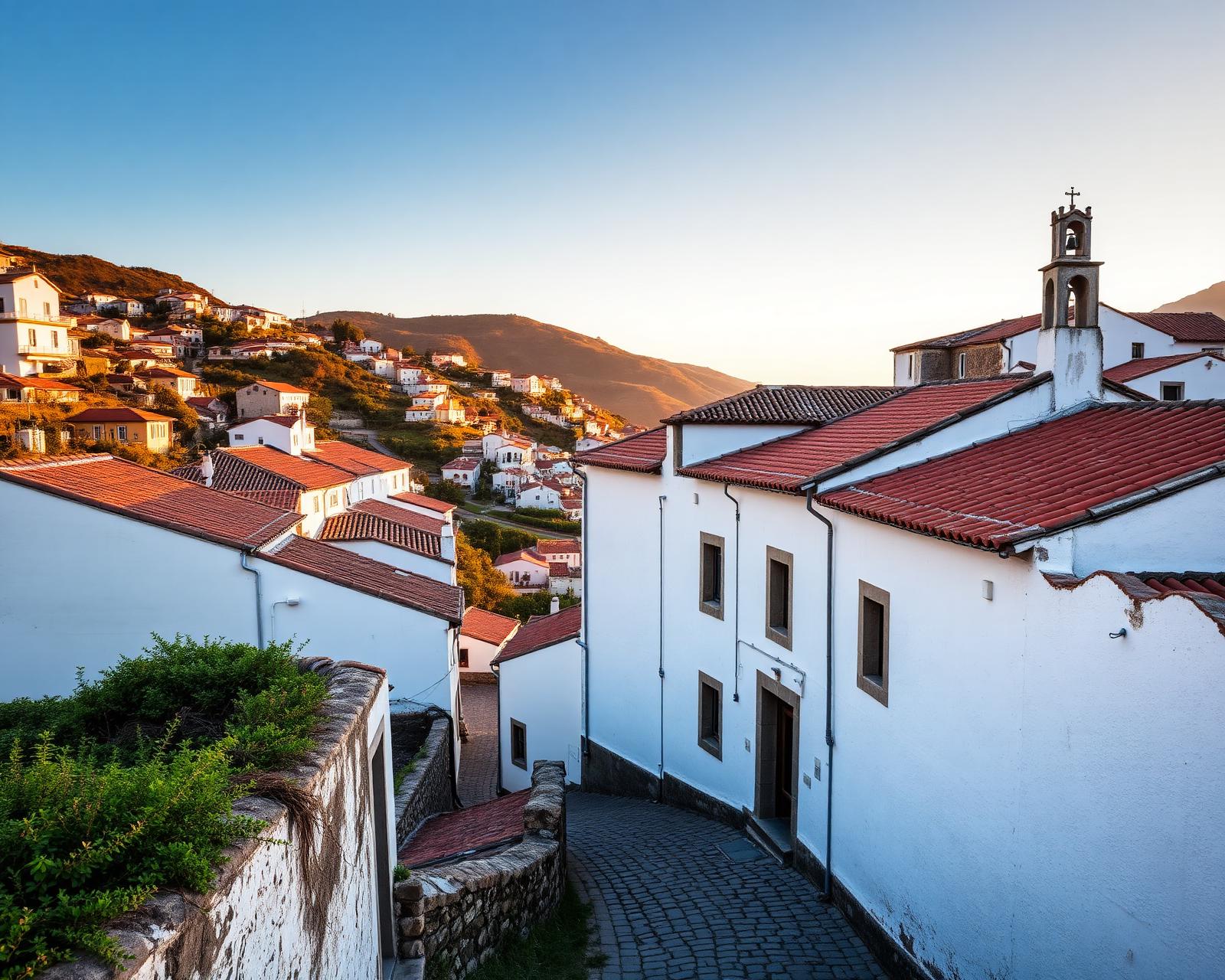
Portugal has small countries inside it. Drive an hour from the autoroute in any direction and you find another version of the country — built in different stone, shaped by a different border, fed by a different river. The villages here are the part that has stayed itself.
What follows is not a list of the prettiest villages. It is a careful reading of the places where ordinary life — the bakery, the church bell, the agricultural calendar — still organises the day. They reward a slow approach: a single night, an early walk, a long lunch, no schedule.
What we mean by hidden
Hidden, here, does not mean undiscovered. Every village in this guide is on a map, has a postcode and welcomes visitors. What they share is that they have not been rebuilt around tourism. The square is still a square, not a stage; the café is still where the village reads the paper.
If that distinction matters to you, treat the rest of this guide as a reading list rather than a checklist. Choose two regions, not five. Stay at least one night in each. Walk early. Eat where the older men eat.
For wider context, read our overview of Hidden Places in Portugal Most Travellers Miss first.
Schist villages of the central hills
The Aldeias do Xisto — schist villages — are scattered across the central Portuguese hills between Coimbra and the Serra da Estrela. They are built almost entirely from dark, layered stone quarried from the surrounding ridges, and the network has been carefully restored without losing the architecture's quietness.
Talasnal clings to a steep slope in the Serra da Lousã and is best reached on foot from the lower car park. Cerdeira, nearby, has become a small artists' village without ever feeling staged. Janeiro de Cima sits along the Zêzere river and pairs well with a swim at a river beach in the late afternoon.
These villages are at their best in spring and early autumn, when the river beaches are open but the hills have not yet hardened into summer heat.
White villages of the Alentejo
The Alentejo's white hill villages sit above plains of cork oak, wheat and olives. They are built whitewashed against the heat, with narrow streets, low arches and tiled rooftops that catch every degree of evening light.
Monsaraz, above the Alqueva reservoir, is the most photographed but still worth a slow evening. Castelo de Vide and Marvão, near the Spanish border, are paired easily on the same drive — Marvão for the long view from its walls, Castelo de Vide for the Jewish quarter and the springs.
Mértola, further south, sits above the Guadiana river where Roman, Islamic and Christian Portugal overlap in a single hilltop. It deserves more than the half-day most itineraries give it.
Walled border villages
Portugal's eastern border with Spain is lined with small fortified villages that once defended the kingdom and now defend their own quiet. They feel older than the road that reaches them.
Monsanto, built into and around enormous granite boulders, is the most famous and earns its reputation if you stay overnight after the day visitors leave. Sortelha, nearby, is smaller and stranger — a complete walled village inside a ring of stone.
Further north, Almeida and Castelo Rodrigo offer different scales of the same idea: star-fort geometry at Almeida, a single quiet hilltop at Castelo Rodrigo. Pair them with the Côa Valley rock-art park for one of the most rewarding interior itineraries in Portugal.
Inland Algarve squares
The inland Algarve has its own small villages, twenty or thirty minutes from the resort road. Alte, Querença, Salir and Monchique are the easy first names; the slower trip is to choose one and stay rather than visit them in a single morning, using the farmhouses and converted outbuildings in Where to Stay in the Algarve, Away from the Resorts.
For a longer reading of the southern interior, see our guide to Quiet Places in the Algarve Away from the Crowds.
Northern villages above the Douro
Above the Douro, in Trás-os-Montes and the Minho, the villages turn to granite and chestnut. Rio de Onor, on the Spanish border, is shared between two countries and still uses a communal land system. Pitões das Júnias, in Peneda-Gerês, sits high in pasture country above an old monastery ruin.
Soajo and Lindoso are best known for their espigueiros — stone granaries on stilts — but the surrounding walking, river pools and short transhumance trails are the real reason to stay.
How to plan a slow village trip
Pick two regions, not five. Schist Villages with the Serra da Estrela, the Alentejo with the eastern border, or Peneda-Gerês with the upper Douro all make complete trips on their own.
Drive less than the map suggests. A good day is one walk, one village, one slow meal. Plan ferries, mountain passes and Sunday closures around the meal, not the other way around.
Treat photography as a side effect, not a goal. The villages reward patience more than light.
Where to stay nearby
Stay inside the villages rather than in nearby market towns. The best beds are usually family guesthouses, restored stone cottages and Turismo Rural addresses — small in number, often booked weeks ahead in shoulder season.
For atmospheric stays across Portugal, see Unusual Hotels in Portugal Worth Planning a Trip Around.
Experiences worth booking
A guided Côa Valley rock-art tour, a walking day on a transhumance route in Peneda-Gerês, and a small-group olive-mill or cork-harvest visit in the Alentejo are among the few experiences worth pre-booking. Most of the rest of this trip should be left to weather and appetite.
The Unknown Atlas is independent. We do not accept payment for coverage — how we handle commercial links.
A practical layer
Planning this journey
- Where to stay
- Small guesthouses, restored village houses, pousadas, rural hotels, or unusual stays that fit the route.
- Best with
- A small hire car, especially for inland villages, coast roads, Alentejo, Serra da Estrela, and schist villages.
- Experiences nearby
- Guided walks, wine tastings, boat trips, local food experiences, small-group tours, or quiet cultural visits depending on the article.
- Useful add-ons
- Travel insurance, eSIM/data, offline maps, flexible ferry/flight planning, and enough cash for smaller villages.
Quiet planning notes — never a booking widget. See our disclosure.
Continue exploring
More from Hidden Places in Portugal

Hidden Places
Hidden Places in Portugal Most Travellers Miss
Beyond Lisbon, Porto and the headline beaches, Portugal keeps a quieter country of stone villages, schist hamlets, river gorges and an Atlantic coast that thins out the moment the highway turns inland.
Hidden Places
Where to Stay in the Algarve, Away from the Resorts
The Algarve most people book is thirty kilometres of resort coast. The Algarve worth staying in is everywhere else — and it is mostly farmhouses, converted outbuildings, and places with fewer than a dozen rooms.
Hidden Places
Secluded Retreats in Portugal
Portugal has an unusual amount of empty country for a small nation, and a habit of putting guests in buildings that were something else first. These are the places you cannot walk to a shop from.